Stop Guessing. Start Testing.
Stop Guessing. Start Testing.
Find out why your home isn’t performing as it should.
Hot and cold rooms. High humidity & musty air. High utility bills. An HVAC system that can’t keep up. Home Performance Pro uses building science and diagnostic testing to find what’s actually causing the problems, before you spend more money on fixes that might not work.
-
Thermal
Comfort - HVAC Performance
- Indoor Air Quality
- Moisture Control
-
Energy
Efficiency
The Process
Inspect. Diagnose. Improve.
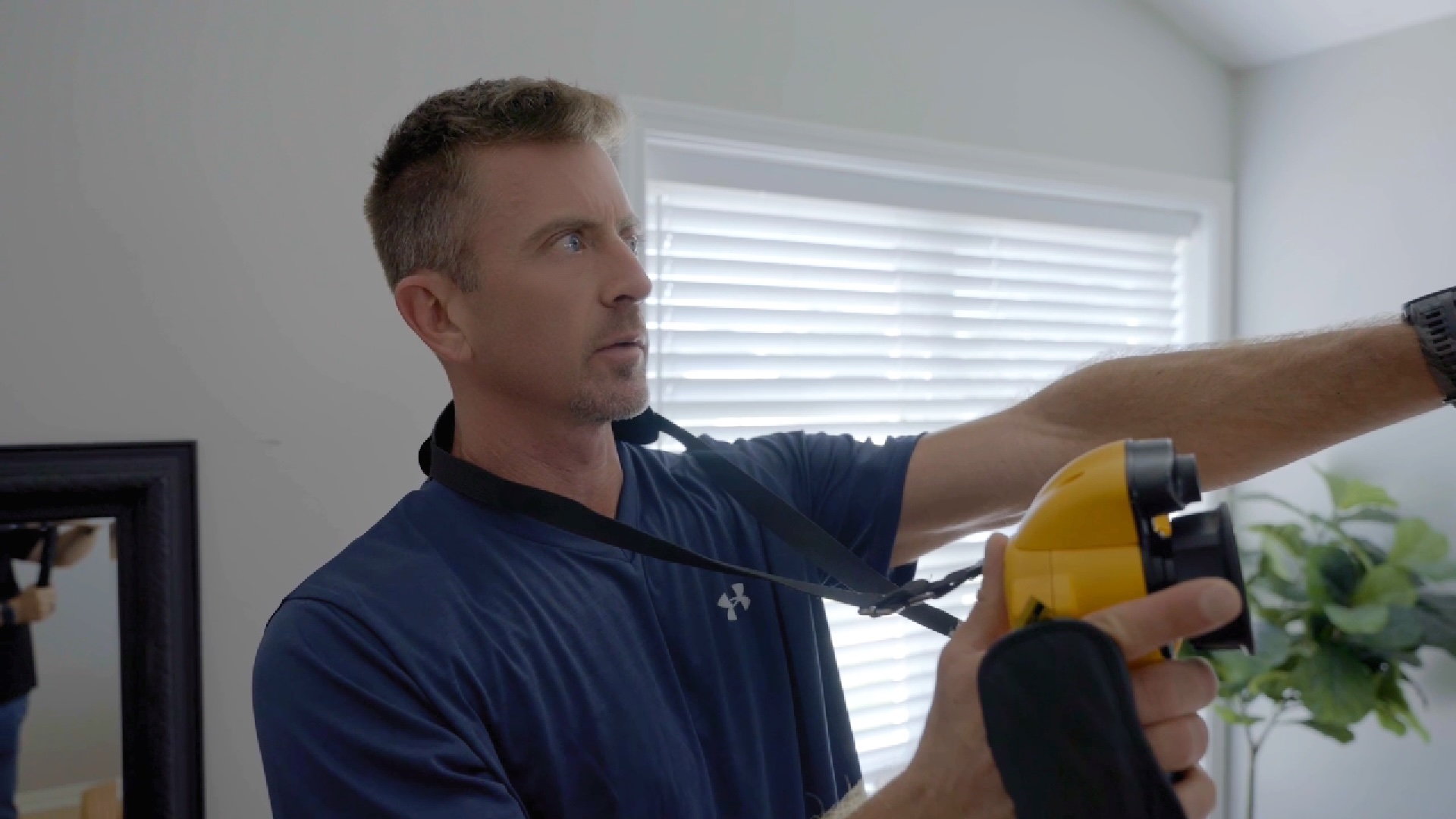
Every Home Performance Inspection follows the same three stages.
-
Step 1
Inspect
We start by listening. Which rooms, what time of year, what’s already been tried. Then we inspect the house and run tests to see how it’s actually performing.
-
Step 2
Diagnose
The test results tell us what’s causing the problem. It’s often more than one thing, and the cause isn’t always what you think.
-
Step 3
Improve
You get prioritized recommendations in plain English. What to fix first, what can wait, and why, so you can decide what happens next.
Not every house needs every test. See what we test
Start Here
What’s going on with your home?
Pick whatever sounds familiar. You don’t need to know the technical term for it.
-
My house is uncomfortable
Hot rooms, cold rooms, uneven temperatures. -
It’s humid, damp or wet
Sticky air, wet windows, damp basements, musty smells. -
It’s the crawlspace, basement or attic
Musty, damp, or brutally hot — and the rooms above feel it. -
I’m concerned about the air we breathe
Odors, dust, stuffiness, allergy symptoms indoors. -
My energy bills are too high
And nobody can tell me why. -
My HVAC can’t keep up
It runs and runs, and the house still isn’t comfortable. -
I think I have drafts or insulation problems
Cold floors, drafty rooms, rooms over the garage. -
Nobody can figure out my problem
You’ve had people out, and it’s still happening. Tell us what’s going on.
Why testing matters
Most advice starts with a product. Ours starts with a test.
Product-first thinking
- “You need more insulation.”
- “You need a bigger HVAC system.”
- “You need new windows.”
- “You need a dehumidifier.”
Diagnostic thinking
“Let’s test the house first and find out why the problem is happening.”
Most contractors want to do good work and help you, but each one naturally looks at the problem through their own specialty. The HVAC company looks at the equipment. The insulation company looks at the insulation. The window company looks at the windows. That’s their job.
Sometimes they’re right. Sometimes the cause is somewhere else entirely, or it’s a combination of issues. A Home Performance Inspection looks at the whole house first, so the underlying causes get fixed.
It’s not just about improving comfort and saving on utilities. A house that’s leaky and can’t control moisture is an unhealthy home, and your family breathes that air in constantly.
Stop Guessing. Start Testing.
House as a system
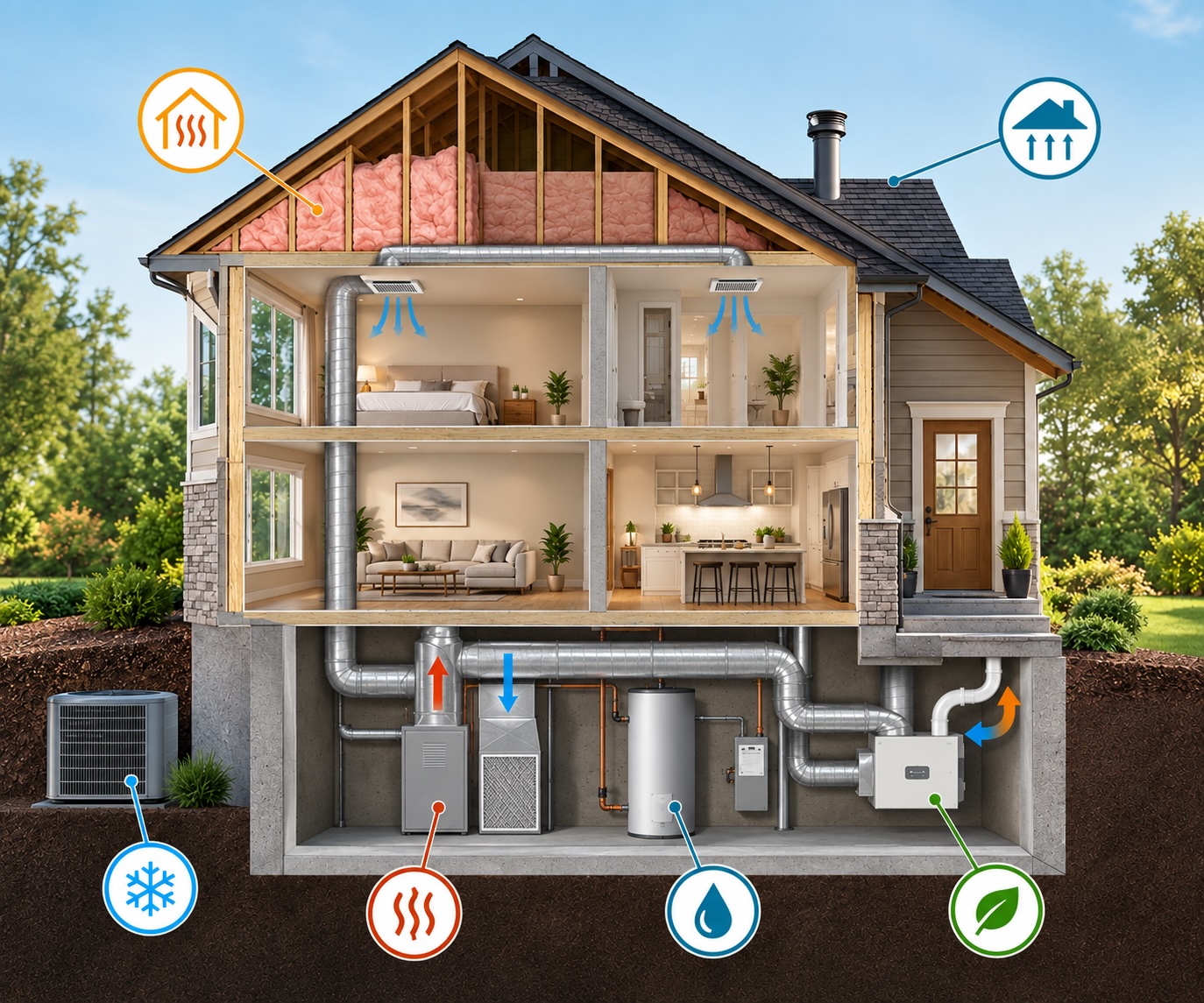
Your house is a system.
Insulation, air leakage, ductwork, HVAC equipment, moisture, ventilation, air pressure, and the way you live in the house all affect each other. Change one and you can change the others.
That’s why we look at the whole house before recommending anything.
-
An oversized air conditioner
cools the house quickly, but may not run long enough to pull the humidity out of it.
-
Leaky ducts in a crawlspace or attic
can pull that air, and whatever is in it, into the rooms you live in.
-
Sealing a house tighter
changes how it ventilates, so fresh air and moisture have to be accounted for.
What we test
We test what’s actually happening.
Every house has different problems, and we only test what’s necessary to uncover the causes of your symptoms.
-
Thermal imaging
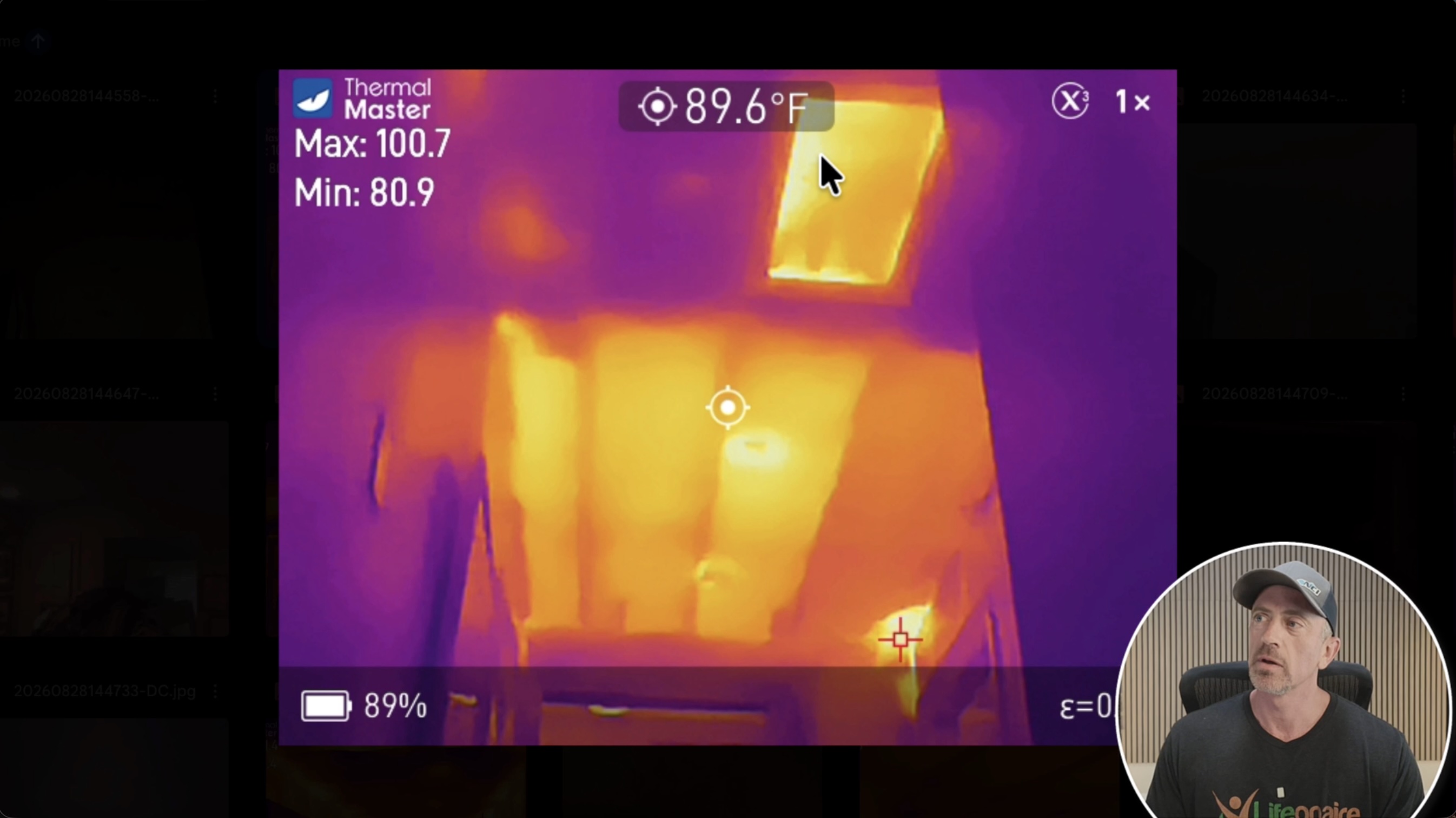
Temperature patterns that identify missing insulation, air leaks and possible moisture.
-
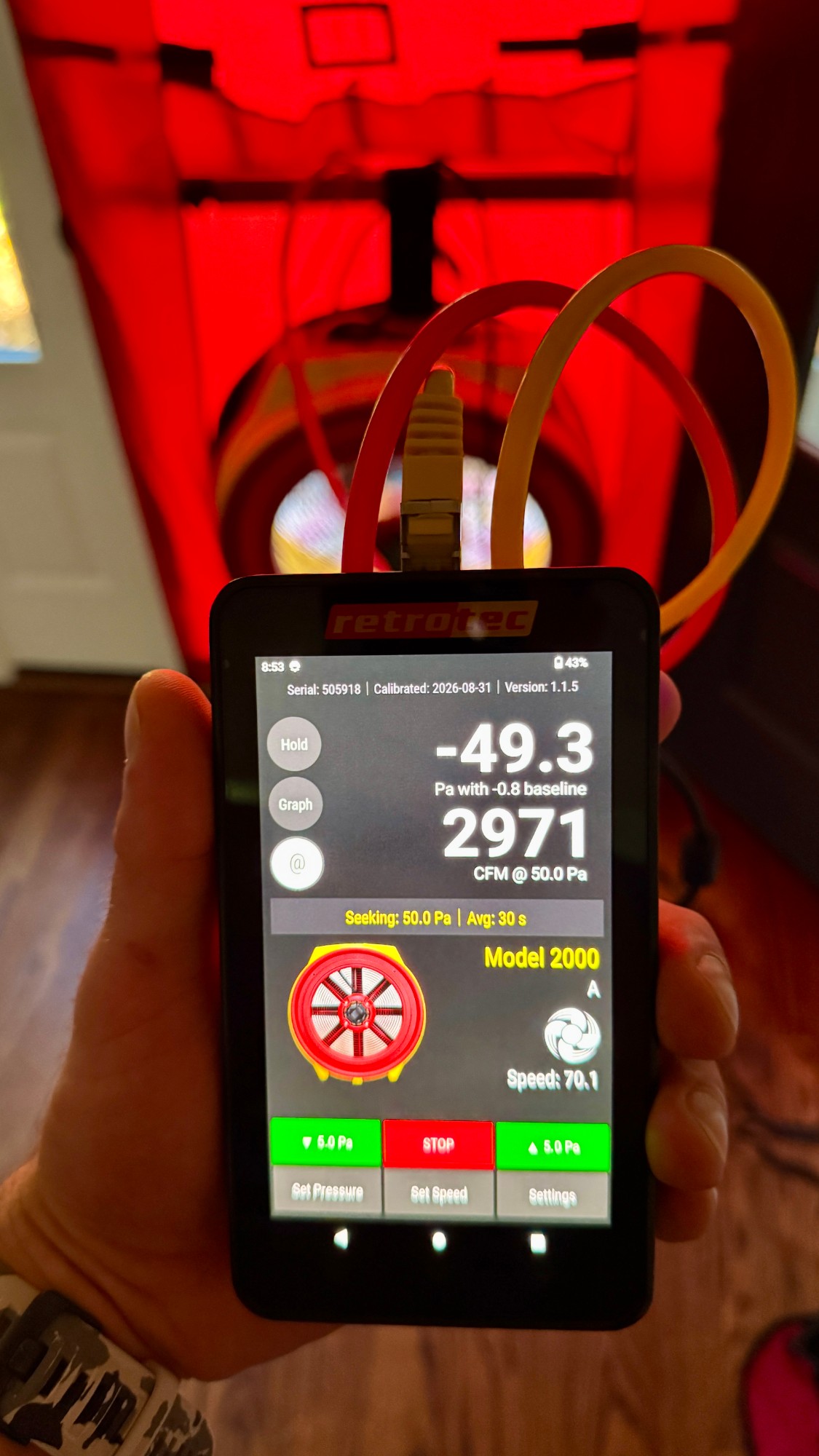
Blower door testing
How leaky the house is, and how it compares to others its size.
-
Duct testing
Which ducts are leaking into the attic or crawlspace, and which ones aren’t.
-
HVAC diagnostics
From airflow and static pressure to Manual J heating & cooling load calculations.
-
Moisture assessment
Moisture, humidity and dew point, to trace where the water is coming from.
-
Pressure diagnostics
How pressure differences move air, moisture and odors through the house.
-
Indoor air quality
Monitor the air in your home and control filtration, humidity, and ventilation.
-
Building envelope
Ceilings, walls, windows and foundations — we identify the insulation layers and air barriers.
We visually check for combustion safety concerns on every inspection. If something concerning is found we’ll refer you to a contractor we trust to investigate further.
After the inspection
You get a Home Performance Report.
Not a checklist with boxes ticked. A video walkthrough of your house, with the test results, the thermal images and what we recommend — in the order we’d do it.
-
1
A quick debrief, if needed
We keep it short on purpose — everything gets covered in detail in the video report.
-
2
Your report, in one to three days
You get an email with a link to a folder containing your Home Performance Report, along with every photo, video and thermal image taken during the inspection.
-
3
Built so you can actually use it
The email lists timestamps for each section, so you can quickly review recommendations later.
-
4
You decide what happens next
Handle it yourself, take the recommendations to your own contractor, or use the local contractors we trust. We’ll also send links to the specific products we’d use.
In your report folder
- Video Home Performance Report
- Every photo and video from the inspection
- Thermal images
- Your test results
- Prioritized recommendations
- Product links
- Local contractors we trust

Meet Eric
Thousands of homes. Decades of experience. One goal: find the real problem.
I’m Eric George. I’ve spent more than 20 years around insulation, weatherization, energy efficiency and building science.
It started in the 1990s in my parents’ fire and water damage restoration business, where I first learned psychrometrics. From 2004—2008 I ran a small insulation and weatherization company. In 2008 I founded Building Performance Group, doing third-party inspections and diagnostics for builders and homeowners — thousands of HERS Ratings on new homes and energy audits on existing ones since then.
What that means for you: I’ve seen a lot of problems that looked simple and weren’t. I know how to test for the cause, and I’ll explain what I find in plain language so you can make the best decision about your own house.
I’m a certified RESNET HERS Rater, with extensive training in building-envelope and HVAC performance diagnostics through BPI and the National Comfort Institute. I also teach this stuff — to homeowners on YouTube, and to contractors and builders in the field.
- 20+ Years of experience
- Thousands of homes inspected
- RESNET Certified HERS Rater
- Based in Louisville Kentucky & Southern Indiana
What we do
Inspections first. Then whatever the house needs.
Most people start with an inspection. Where it goes from there is up to you.
-
Home Performance Inspections
Testing and diagnostics to find what’s actually causing the problem.
-
Consulting & Project Management
Making sense of bids and products, and managing the work if you’d rather not.
-
Contractor Training
Building science for the trades, taught by someone still in the field.
-
Online Courses & Resources
Learn how houses work at your own pace, homeowner or pro.
Free videos & online course
Understand your home. Make better decisions.
Eric teaches homeowners and contractors how houses actually work — how they leak, how they hold moisture, and why the obvious fix often isn’t the right one. It’s all free on his YouTube channel, Home Performance Pro. Not ready to schedule anything? Start here.
Questions
Before you schedule
Is this the same as a traditional home inspection?
No. A traditional home inspection is a broad condition report for a real estate transaction — roof, structure, appliances, safety items — and it doesn’t involve diagnostic testing. We’re not home inspectors.
A Home Performance Inspection asks a different question: how is this house actually performing, and why? We answer it with blower door testing, pressure pan readings, thermal imaging, and airflow and pressure testing — equipment and training that sit outside a standard home inspection.
We do inspect houses people are about to buy. If you want to know what you’re walking into before you close — the comfort problems, the moisture risk, what the HVAC and the envelope are really going to cost you — that’s worth doing. Just plan on a traditional home inspection as well. The two answer different questions.
How long does an inspection take?
A standard inspection on an average-size house takes about two to three hours. That covers the blower door test, pressure pan readings, thermal imaging, and a visual inspection of everything we can reach.
Adding HVAC performance testing or a heating and cooling load calculation can add a couple of hours. Larger houses, or houses with several systems, sometimes take more than one visit.
What does it cost?
It depends on the size of the house, how many heating and cooling systems it has, and how far we need to go to answer your question. We’ll talk through what you’re dealing with and quote it before anything is scheduled — no surprises when we show up.
Which tests will you do at my house?
Whichever ones fit the problem. A humidity complaint in a house over a crawlspace calls for different tests than a cold room above a garage. We decide based on the house and what you’re experiencing, not from a fixed checklist.
Do you sell or install anything?
No. We don’t sell products and we’re not a general contractor — nothing gets installed by us. If you want help getting the work done, we can consult on it or manage the project as an independent third party. You hire and pay the contractors directly; our fee is for our time, not a markup on their work. The recommendations come from what we test, and you’re free to take them to any contractor you like — or do the work yourself.
What areas do you serve?
Louisville and Jefferson County, the surrounding Kentucky counties, and Southern Indiana. We travel roughly ninety minutes out from Louisville. If you’re not sure whether you’re in range, just ask.
Service area
Serving Louisville and about ninety minutes around it.
Home Performance Pro is based in Crestwood, Kentucky. We work throughout Louisville and Jefferson County, the surrounding Kentucky counties, and Southern Indiana.
Not sure whether you’re in range? Ask — we travel farther than most people expect, and consulting work doesn’t need us on site at all. We’ve helped homeowners and contractors well outside Kentucky.
Communities we work in regularly
- Louisville
- St. Matthews
- Jeffersontown
- Middletown
- Prospect
- Crestwood
- La Grange
- Shelbyville
- Mount Washington
- Shepherdsville
- Jeffersonville, IN
- New Albany, IN
… and many more across the surrounding counties.
Stop Guessing.
Start Testing.
If you’re tired of getting different answers about what’s wrong with your house, start with a Home Performance Inspection.
Or call (502) 509-2865 · Tell us what’s going on